Sustainable product design is changing the way brands think about even the smallest components. Handles, trims, loops and straps are no longer selected only for cost and strength; they also contribute to touch, appearance, material story and end-of-life considerations. This is one reason cotton webbing has become increasingly relevant for fashion, reusable packaging, canvas bags and home-textile products.
For brands searching for a Cotton webbing tape manufacturer India, the objective is usually to combine a natural aesthetic with dependable manufacturing. Cotton webbing can provide a soft hand feel, matte surface and familiar textile character that synthetic straps may not replicate.
What Is Cotton Webbing?
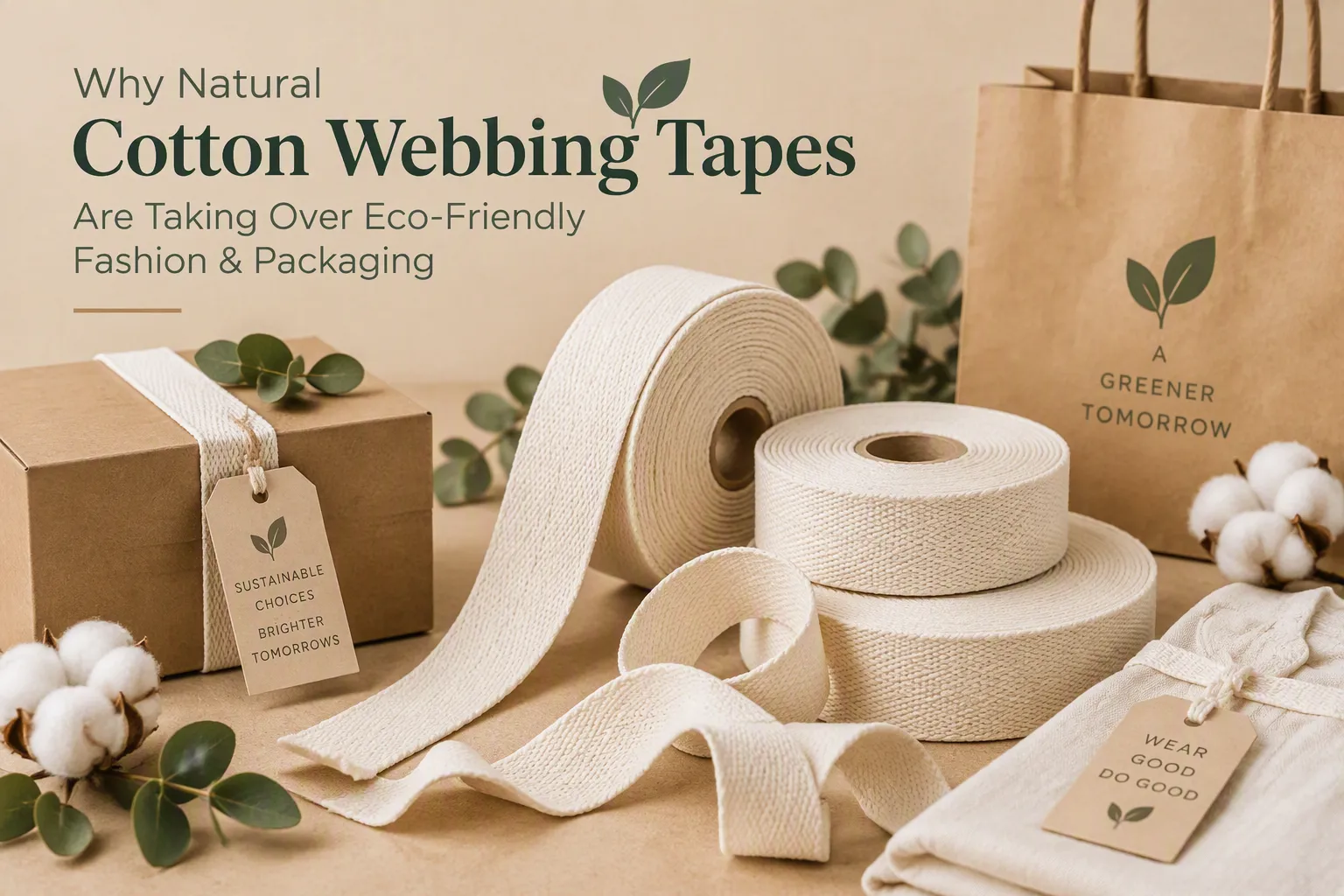
Cotton webbing is a narrow woven fabric produced from cotton yarn and manufactured in different widths, thicknesses and weave structures. Depending on construction, it can be soft and flexible or dense and structured. It is commonly used for tote-bag handles, apron straps, belts, trims, home accessories, packaging handles and lifestyle products.
The appeal is both functional and visual. Cotton accepts many dyeing and printing approaches, feels comfortable against the skin and pairs naturally with canvas, denim, jute-inspired materials and other textile surfaces.
A Cotton webbing tape manufacturer India can develop tapes to suit a brand’s required width, weight, colour and handle, subject to manufacturing capability and order quantity.
Why Fashion Brands Like the Natural Look
Modern sustainable fashion often favours materials that look tactile and authentic. Cotton webbing supports that direction because its surface has a textile character rather than a highly technical appearance. Natural, off-white and earthy shades can work particularly well for minimalist accessories and canvas collections.
Soft-touch cotton tapes are also useful where a strap touches the body, such as shoulder bags, aprons and selected garment details. The final comfort, however, depends on weave density, thickness, edge construction and finishing, so brands should evaluate physical samples.
For designers, webbing can become a visible design element rather than a hidden component. Contrasting colours, woven textures and printed branding can turn a functional handle into part of the product identity.
Cotton Webbing in Reusable Bags and Packaging
Reusable packaging has increased interest in handles that feel substantial and premium. Eco-friendly bag handles made from cotton webbing are commonly considered for canvas totes, gift bags, textile packaging and reusable retail bags.
Compared with a thin cord or basic handle, a wider cotton webbing can distribute pressure more comfortably across the hand or shoulder. It can also provide a larger surface for colour, print or branding.
Understanding “Organic Cotton Webbing”
The phrase organic cotton webbing should be used carefully. A tape should not be marketed as organic merely because it is made from cotton. If a brand requires certified organic material, it should request appropriate chain-of-custody or material documentation from the supplier and confirm which certification applies to the yarn, processing and final product.
This distinction matters for brands making environmental claims. Procurement teams should ask a Cotton webbing tape manufacturer India for verifiable documentation rather than relying on broad sustainability language.
Cotton Versus Synthetic Webbing
Cotton is not automatically the best choice for every application. Polyester, nylon and polypropylene may offer advantages where high strength-to-weight ratio, low moisture absorption, weather exposure or specific technical performance is required.
Cotton is often preferred for hand feel, natural appearance and compatibility with lifestyle products. Synthetic webbing may be more appropriate for outdoor equipment, wet environments or demanding industrial loads.
A thoughtful product specification can also use different materials in different areas. For example, a fashion bag may use cotton webbing for visible handles while another technical component uses synthetic reinforcement. Material selection should follow function rather than trend alone.
Colour, Dyeing and Finish Considerations
Cotton can be dyed in a wide range of colours, but buyers should establish colour tolerances and performance expectations before bulk production. Dark colours, light shades and brand-specific tones may behave differently depending on yarn, dye process and finishing.
Ask for a lab dip or approved sample where colour accuracy is important. For products that will be washed, exposed to perspiration or rubbed against light fabrics, discuss relevant colourfastness testing.
Designing the Right Handle
For eco-friendly bag handles, width and thickness directly affect both appearance and comfort. Narrow webbing can look refined but may concentrate pressure under load. Wider webbing can feel more comfortable but may require different sewing and hardware.
Designers should test the actual bag with representative weight. Evaluate whether the handle twists, stretches, creases or feels rough. Check how cleanly it folds at the attachment point and whether the sewing machine can handle the combined thickness of webbing and bag fabric.
A Cotton webbing tape manufacturer India can be most useful when the buyer shares the finished-product context rather than only asking for a generic tape.
Branding Opportunities
Cotton webbing provides several branding possibilities. Depending on the required look and supplier capability, brands can consider printing, woven patterns, colour blocking or custom constructions. A simple natural tape with a clean logo can suit premium sustainable packaging, while a bold coloured strap can become a recognizable fashion detail.
The branding process should be tested for durability. Printing that looks sharp on a sample should also withstand normal handling, folding and friction.
Quality Checks for Bulk Orders
Before approving a production batch, buyers should define measurable criteria. These may include width tolerance, roll length, shade consistency, weave defects, edge quality, contamination, joins, surface finish and packaging.
For applications where strength matters, tensile testing can be included in the quality plan. For washable products, dimensional change and colourfastness may also be relevant.
Inspection should be proportionate to risk. A decorative ribbon and a load-bearing handle do not require the same validation. Clear acceptance criteria help both buyer and manufacturer avoid subjective disputes.
Sustainability Beyond Fibre Choice
Choosing cotton is only one part of responsible sourcing. Brands should also consider dyeing, water use, chemical management, packaging, transport efficiency, product durability and waste reduction.
Durability is especially important. A reusable bag that fails early may undermine the environmental benefit expected from repeated use. Good material selection, strong stitching and appropriate webbing construction help extend useful life.
When discussing sustainability with a Cotton webbing tape manufacturer India, ask specific questions: What material is used? Is certification available? How is colour applied? Can packaging be reduced? Can roll lengths be optimized to reduce cutting waste?
Sourcing Cotton Webbing for Your Next Collection
For fashion brands, canvas-bag manufacturers and home-textile companies, cotton webbing offers a strong combination of tactile appeal and design flexibility. The best results come from matching fibre, weave, width, colour and finish to the actual product.
When sourcing through webbingtapes.com, provide your intended application, dimensions, colour reference, estimated quantity and any testing or certification requirement. A physical sample can then be evaluated before bulk production.
A capable Cotton webbing tape manufacturer India should help turn a visual concept into a repeatable specification. Whether the goal is organic cotton webbing with documented sourcing, premium eco-friendly bag handles or soft-touch cotton tapes for lifestyle products, disciplined sampling and clear quality criteria are what transform a sustainable idea into a production-ready component.